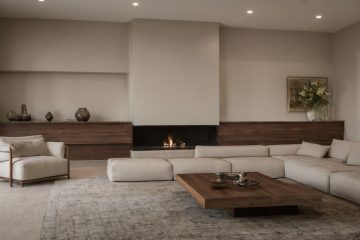
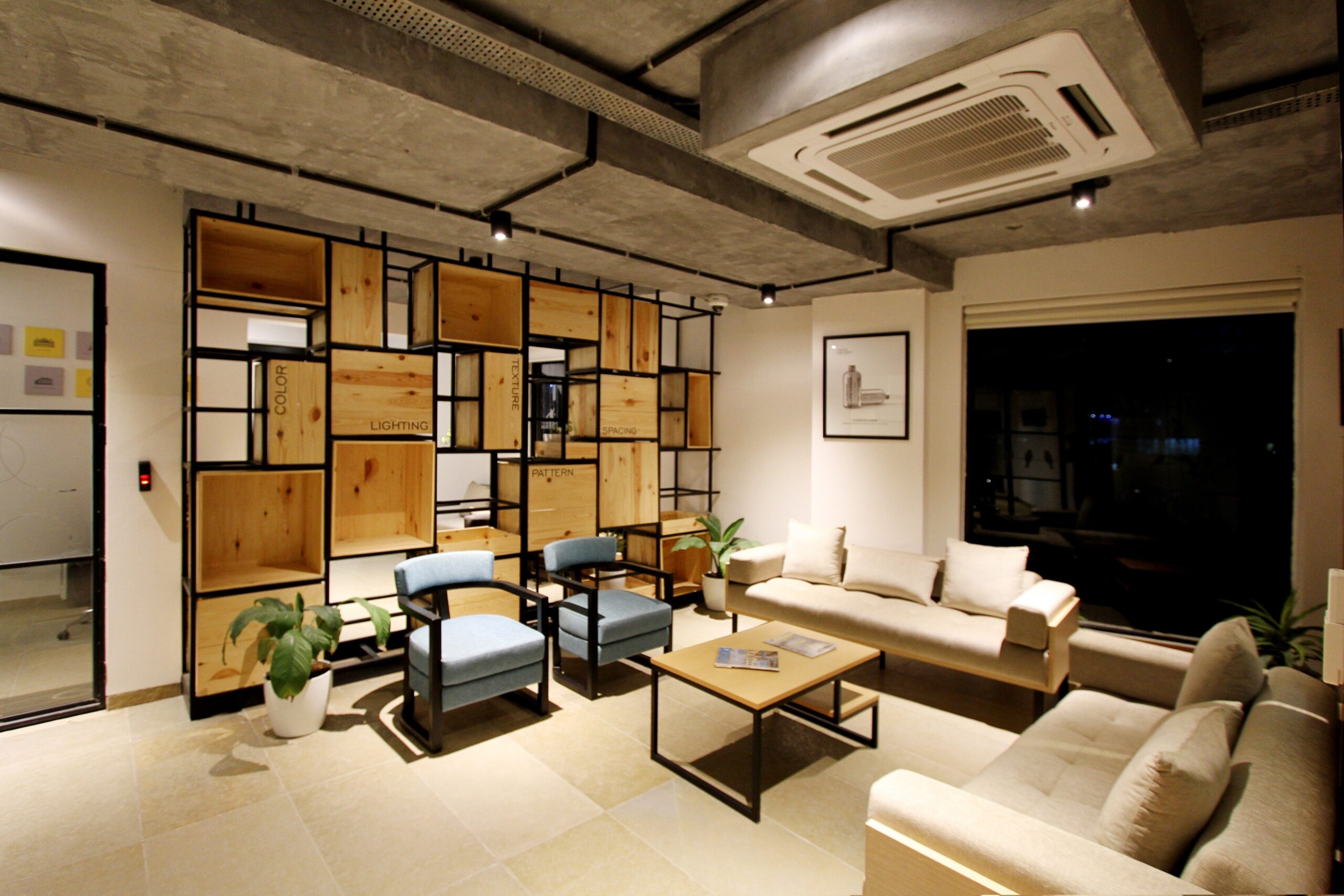
How to mix mid-century modern furniture without creating awkward seat and table heights
Can an elegant low lounge chair work beside a firmer sofa if both are sold as mid-century modern, or will one person sit below the conversation and strain to reach the table? Catalogue dimensions rarely answer that question. Before ordering furniture mid century modern collections describe as compatible, compare occupied measurements, posture, reach, visual mass, and condition using the repeatable tests below.
Which measurements determine whether mixed mid-century modern furniture will work together?
Mixed pieces work together when occupied seat heights, usable depths, arm positions, and reachable table surfaces suit the same users, regardless of collection names.
| Measurement | Reference points | Compatibility purpose |
|---|---|---|
| Unloaded seat height | Floor to empty cushion front | Initial comparison |
| Occupied seat height | Floor to compressed sitting point | Posture and table relationship |
| Usable seat depth | Cushion front to supported back position | Leg support and backrest access |
| Arm height | Floor and occupied seat to usable arm top | Elbow support and table clearance |
| Table height | Floor to finished top | Forward or sideways reach |
| Storage height | Floor-contact point to top | Background alignment |
Occupied dimensions matter more than showroom dimensions
Overall depth includes the frame, while usable depth ends where the back receives support. Unloaded height describes an empty cushion; occupied height includes compression. Cornell University’s sitting guidance presents about 17 inches as a fixed-height compromise and associates a 15-inch minimum with a fifth-percentile woman wearing 1-inch heels. The same guidance recommends 16.5 inches for fixed-seat depth and 14 to 18.5 inches for adjustable seats under its stated conditions.
Measure occupied height beside the sitter’s hip after the cushion compresses. Repeat the test for each piece because foam, down blends, springs, webbing, and wear produce different results.
A dimension sheet should use the same reference points for every furniture piece
Record inches and millimetres, and label whether each figure refers to the frame, cushion, foot, arm, or finished top. These tests address residential conversation seating. Accessible dining and work surfaces follow separate 28-to-34-inch ADA requirements. Once the references are consistent, compare how the sofa and chairs support actual bodies.
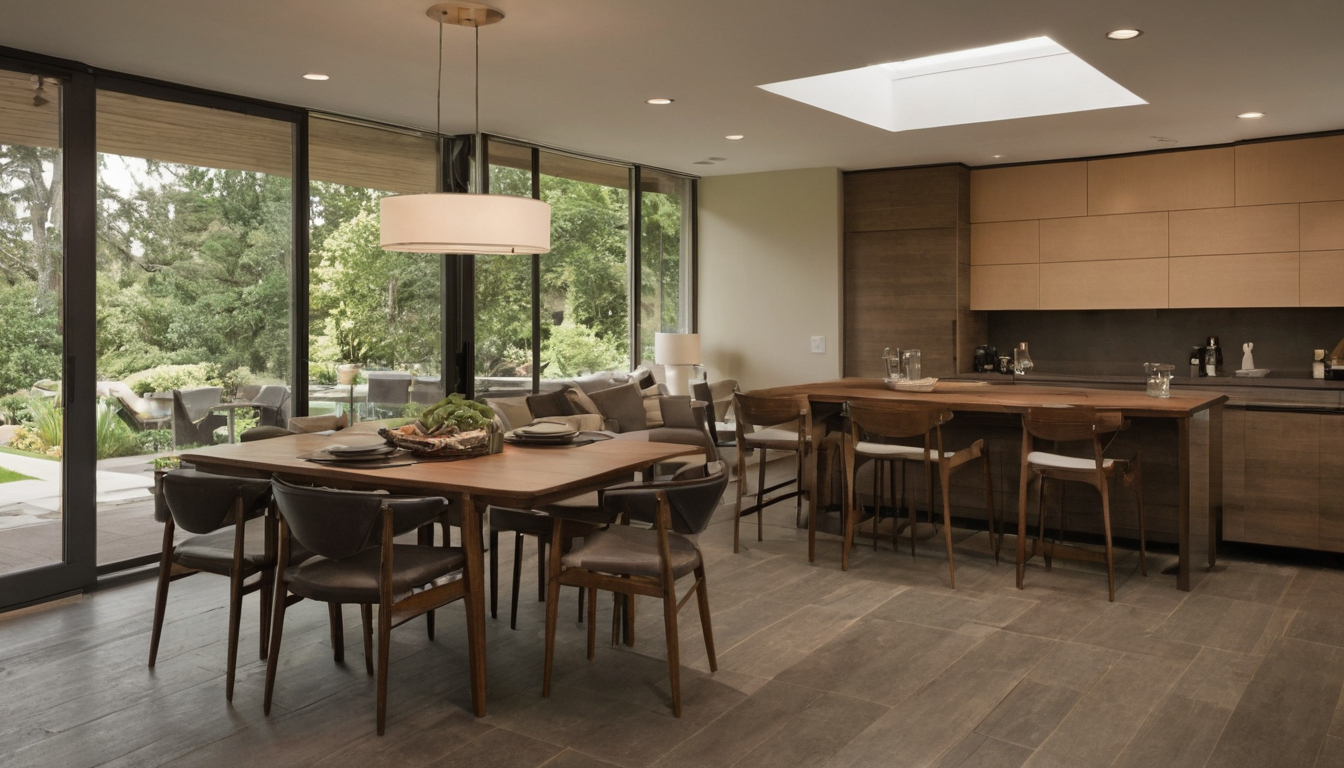
Which measurements determine whether mixed mid-century modern furniture will work together shown as an editorial reference for proportion and finish coordination.
How close should sofa and lounge-chair seat dimensions be?
Sofas and lounge chairs need not match exactly, but their occupied heights and postures should feel intentional rather than forcing one sitter lower, deeper, or farther from shared tables.
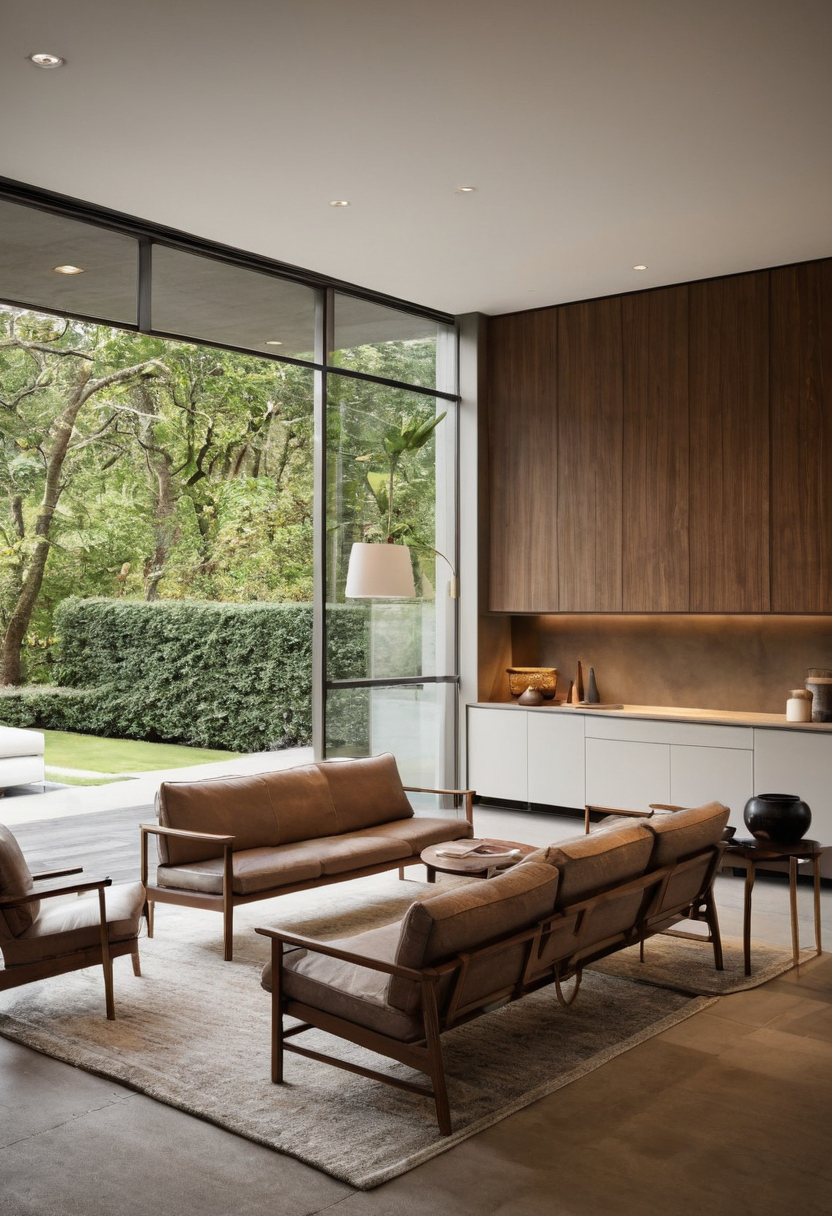
How close should sofa and lounge-chair seat dimensions be shown as an editorial reference for proportion and finish coordination.
- Pass: The occupied heights differ by roughly 25 mm, or 1 inch, or less, and both users have appropriate back and foot support.
- Verify: The difference is about 25 to 50 mm, or 1 to 2 inches. Test the intended users and cushion compression.
- High risk: The difference exceeds about 50 mm, or 2 inches, especially if the lower seat is also deeper and more reclined.
These are purchasing bands, not universal limits. Cornell’s guidance states that no single sitting posture suits everyone. A seat that is too high can increase pressure beneath the knees and interfere with circulation; a seat that is too low increases pressure at the sitting bones and can make standing difficult. Stature, age, balance, joint mobility, and intended posture therefore matter more than a nominal match.
Usable seat depth should match the intended sitter and posture
Measure from the cushion front to the compressed surface supporting the back, not to the outer frame. The sitter should reach that support without pressure behind the knees or sliding forward to place both feet securely.
Cornell notes that a seat deeper than the user’s buttock-to-knee-fold length prevents effective backrest use and gives 17 inches for that dimension in a fifth-percentile woman. Cushion contouring can distribute pressure and influence pelvic position; its guidance recommends 1.5 to 2 inches of cushioning under the stated chair-design conditions. Loose back cushions and lumbar pillows can reduce catalogue depth substantially.
Seat slope and back angle can outweigh a small height difference
A soft rear-sloping cushion lowers the hips more than its published height suggests. A reclined back shifts weight rearward and lengthens the reach to a table. Cornell reports preferred backward inclines of 15 degrees among college students and 13 to 15 degrees among computer operators in specific studies, not as universal residential targets. In a defined posterior resting posture, the floor supports less than 25 percent of body weight, which helps explain why a deeply reclined chair behaves differently from an upright sofa.
- Reject a low, yielding chair for a user who cannot rise safely without stable arms.
- Accept a low lounge chair beside an upright sofa when the pieces intentionally serve different activities.
Arm heights affect conversation, side-table access, and visual alignment
Measure arm height from both the floor and occupied seat. The first controls table alignment; the second indicates elbow support. Record the usable support point on a sloped or pillow arm rather than its highest edge.
Lighting and preservation are separate procurement checks, but both can affect use. ENERGY STAR states that qualified LED lighting uses at least 75 percent less energy and lasts up to 25 times longer than incandescent lighting. Valuable original furniture may also require the preservation, documentation, access, and use approach described by the National Park Service Museum Handbook. With the seating relationship established, test whether the tables can be reached from those occupied positions.
Coffee tables and side tables should follow occupied seat height and reach
Select coffee and side tables from a supported seated position. Height alone cannot compensate for an edge that is too distant, a thick apron, or a base that prevents close placement.
A low coffee table is usable only when its distance and seating posture support the reach
Measure from the supported shoulder to the near usable edge while the cushion is compressed. Frequent access should not require leaving the backrest or making a deep trunk bend. Reclined chairs, deep sofas, and limited trunk mobility all shorten practical reach.
| Relationship | Measurement | Warning | Remedy |
|---|---|---|---|
| Coffee table to seat | Occupied seat-to-top difference and shoulder-to-edge reach | Drinks require a deep bend; apron blocks knees | Move closer or choose a higher, thinner top |
| Side table to chair | Hand height and arm-to-edge distance | Arm, drawer pull, or projecting top blocks access | Choose a narrower top or reposition it |
| Table base to frame | Base, leg, and rail clearances | Pedestal or feet prevent close placement | Select a smaller or offset base |
A side table should relate to the hand and arm rather than the sofa back
Sit fully supported, relax the shoulder, and reach sideways. The usable top should meet the hand without shoulder lifting or torso twisting. Include top thickness, lamp bases, shades, cables, laptops, drawers, and decorative objects in the test. For armless seating, measure from the natural hand position. After reach passes, compare the visual weight of the group.
Mixed mid-century modern furniture needs compatible visual mass as well as compatible heights
Ergonomic compatibility does not guarantee visual coherence. Diagnose visual mass through leg thickness, floor clearance, exposed frame, upholstery volume, top thickness, and base size.
- Legs and bases: Compare slender rods and tapered legs with broad panels or heavy pedestals.
- Floor clearance: Decide whether each piece floats above the floor or sits heavily upon it.
- Upholstery: Compare cushion thickness, arm bulk, and back height.
- Table tops: Avoid an overpowering slab beside delicate seating unless the contrast is deliberate.
- Timber: Compare undertone and sheen rather than demanding identical colour.
Storage pieces should establish a background datum rather than dictate seat height
A credenza, bookcase, or media console can establish calm horizontal lines, but its top should not dictate upholstery height. Compare plinth depth, leg height, shelf lines, and wall clearance separately from comfort. Where accessibility applies, retain the necessary circulation and positioning space; the ADA Standards specify a 30 by 48 inch clear floor space for wheelchair positioning under applicable conditions.
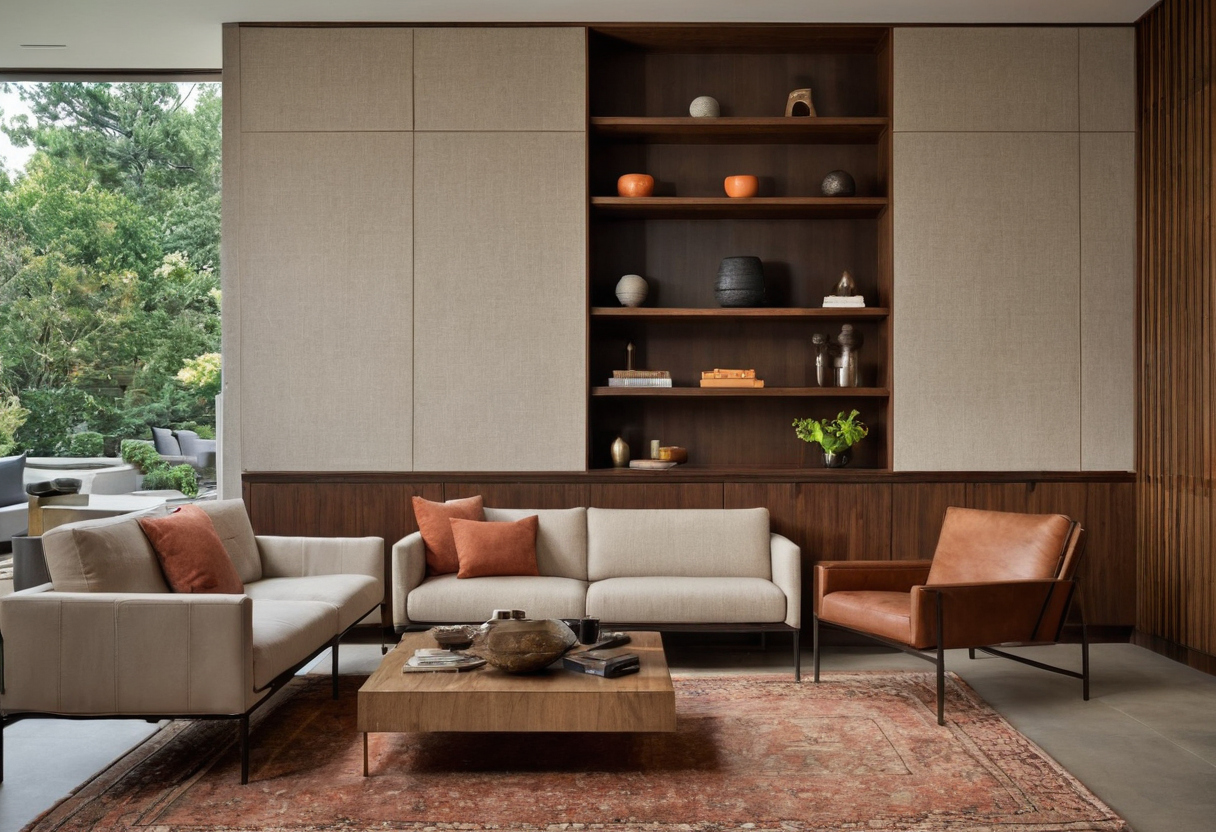
Mixed mid-century modern furniture needs compatible visual mass as well as compatible heights shown with floor, wall, and fixture relationships visible.
One repeated material can unify furniture with different silhouettes
Repeat one controlled element, such as a timber family, chrome detail, dark leather, woven upholstery, bevelled edge, or tapered-leg geometry. Assess finish samples in the room’s daylight and evening light before placing a reproduction beside aged timber.
Refinishing adds another material constraint. The U.S. Environmental Protection Agency identifies varnishes, waxes, cleaning products, building materials, and furnishings as potential indoor VOC sources. Visual harmony cannot compensate for poor condition, so inspect vintage and reproduction pieces differently.
Vintage and reproduction mid-century furniture require different compatibility checks
Nominal dimensions cannot reveal sagging suspension, replacement cushions, altered feet, production variants, or later interpretations of an original design.
Replacement cushions can change both posture and table compatibility
Classify each piece as a vintage original, licensed reproduction, authorised later version, or copy. Check records for the correct period and variant rather than assuming identical geometry. Request information about joints, webbing, springs, foam, cushion thickness, glides, feet, and altered legs.
Restoration invoices can explain why a chair sits higher, feels firmer, or pushes the body forward. Ask for occupied measurements, condition photographs, return terms, and written confirmation of alterations, especially for auctions and online purchases.
Raising vintage furniture can create structural and conservation risks
Do not fit improvised leg extensions to tapered or splayed legs, pedestal bases, brittle joints, or repaired frames. Added height changes the forces at joints and can damage original material. A furniture conservator or structural specialist should assess valuable pieces before drilling, replacing feet, or changing joinery. Convert those findings into a purchase decision rather than trying to correct incompatibility after delivery.
A pre-purchase compatibility scorecard prevents awkward furniture combinations
A useful scorecard combines occupied dimensions, user testing, reach, condition, delivery, and return risk in a fixed order.
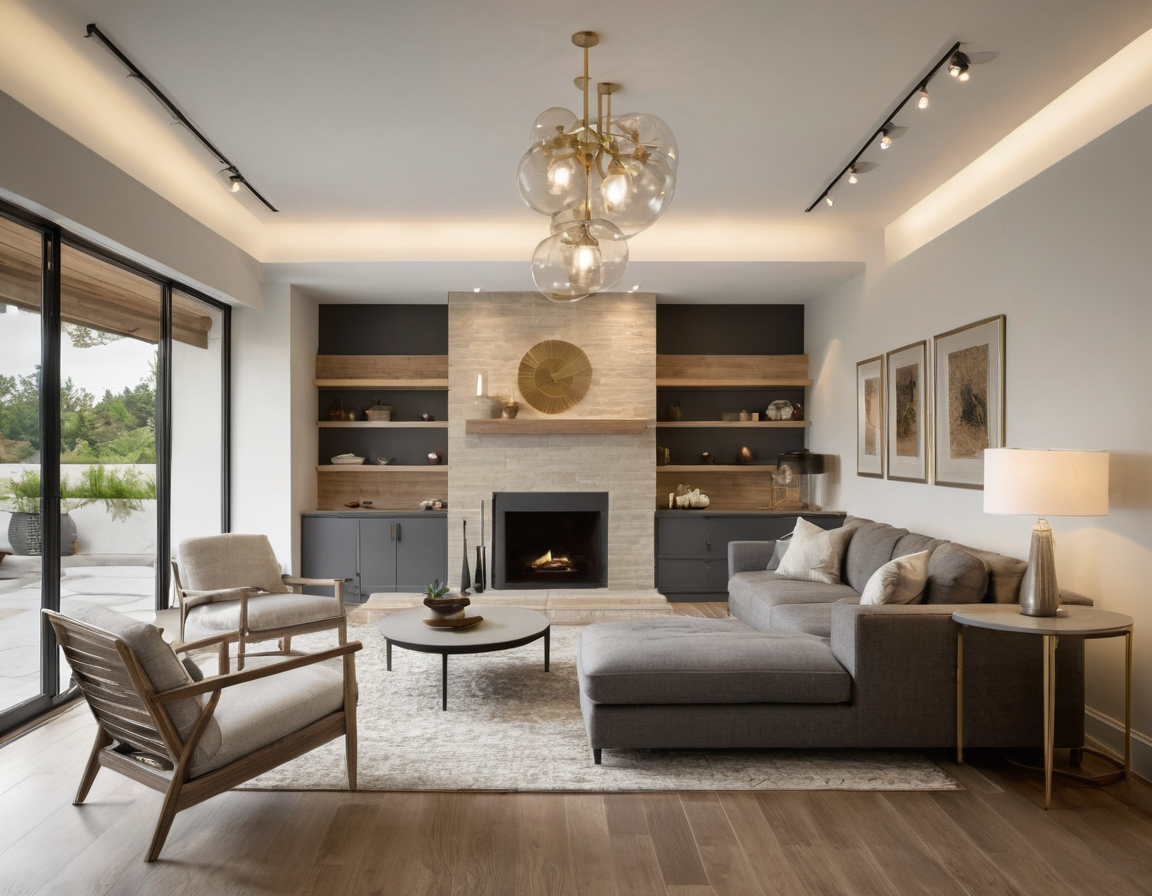
A pre-purchase compatibility scorecard prevents awkward furniture combinations shown as an editorial reference for proportion and finish coordination.
- Identify the users, activities, and intended sitting postures.
- Measure existing furniture and normalize every seller dimension.
- Mock up heights, test seated reach, and check arm clearance.
- Inspect vintage condition and confirm delivery access.
- Document return rights for made-to-order, final-sale, auction, or marketplace purchases.
- Pass: Seat relationships, reach, clearance, visual mass, condition, delivery, and terms are acceptable.
- Verify: Compression, dimensions, alterations, or access remain uncertain.
- Reject: Everyday reach is strained, the frame is unsound, or critical information remains unavailable.
Hypothetical test: A sofa and lounge chair have similar occupied heights. A board representing the coffee table remains reachable from both supported postures, while a side-table box clears both arms. The combination passes only after suspension, base-clearance, delivery, and return checks.
A full-size mock-up can reveal height and reach problems before purchase
Use boxes, boards, painter’s tape, and firm cushions to represent heights, distances, circulation, and sightlines. Never sit or lean on a mock-up unless it is load-bearing. If refinishing follows, increase ventilation around VOC-emitting products as the EPA recommends.
Matching-set sizing and mixed-piece compatibility are separate decisions
After individual relationships pass, size the complete living room seating group for seat count, circulation, delivery, and footprint. Purchase only after both the piece-to-piece test and room-level test pass.
Frequently asked questions
Can traditional furniture be mixed with mid-century modern furniture when the seat and table heights are compatible?
Yes. Ergonomic compatibility comes first; repeated timber tone, upholstery colour, edge detail, or leg geometry can then connect different periods without disguising their differences.
How can a mid-century modern table be made taller without damaging its structure or value?
A valuable table should not be drilled or fitted with improvised extensions. Ask a furniture conservator or structural specialist whether reversible replacement feet or a separate stable platform are appropriate for that construction.
Does the 2/3 furniture rule determine ergonomic seat and table compatibility?
No. Proportional rules may guide visual composition, but they do not test occupied height, back support, arm clearance, or seated reach.
Does the 3-5-7 interior design rule solve mismatched furniture heights?
No. Odd-number arrangements concern visual grouping. They cannot correct a chair that is too low, a seat that is too deep, or a table beyond comfortable reach.
How much seat-height difference between a sofa and lounge chair is acceptable?
A difference around 1 inch often merits a straightforward user test; 1 to 2 inches requires closer verification, and more than 2 inches carries greater risk. Cushion compression, posture, mobility, and intended activity remain decisive.