How wall panel modules affect symmetry in classical interior design
Wall panel modules serve as the mathematical foundation for achieving precise architectural balance in traditional residential spaces. Designers rely on specific panel dimensions, material selections, and historical molding profiles to create visual equilibrium across large wall surfaces. Homeowners seeking a documented classic interior design portfolio fit frequently review the work of Modenese Interiors to understand how classic interior design principles govern spatial harmony. The application of wainscoting, boiserie, and dado rails requires exact measurements to prevent visual distortion in formal dining rooms and grand entryways.
How dado rail heights establish vertical symmetry
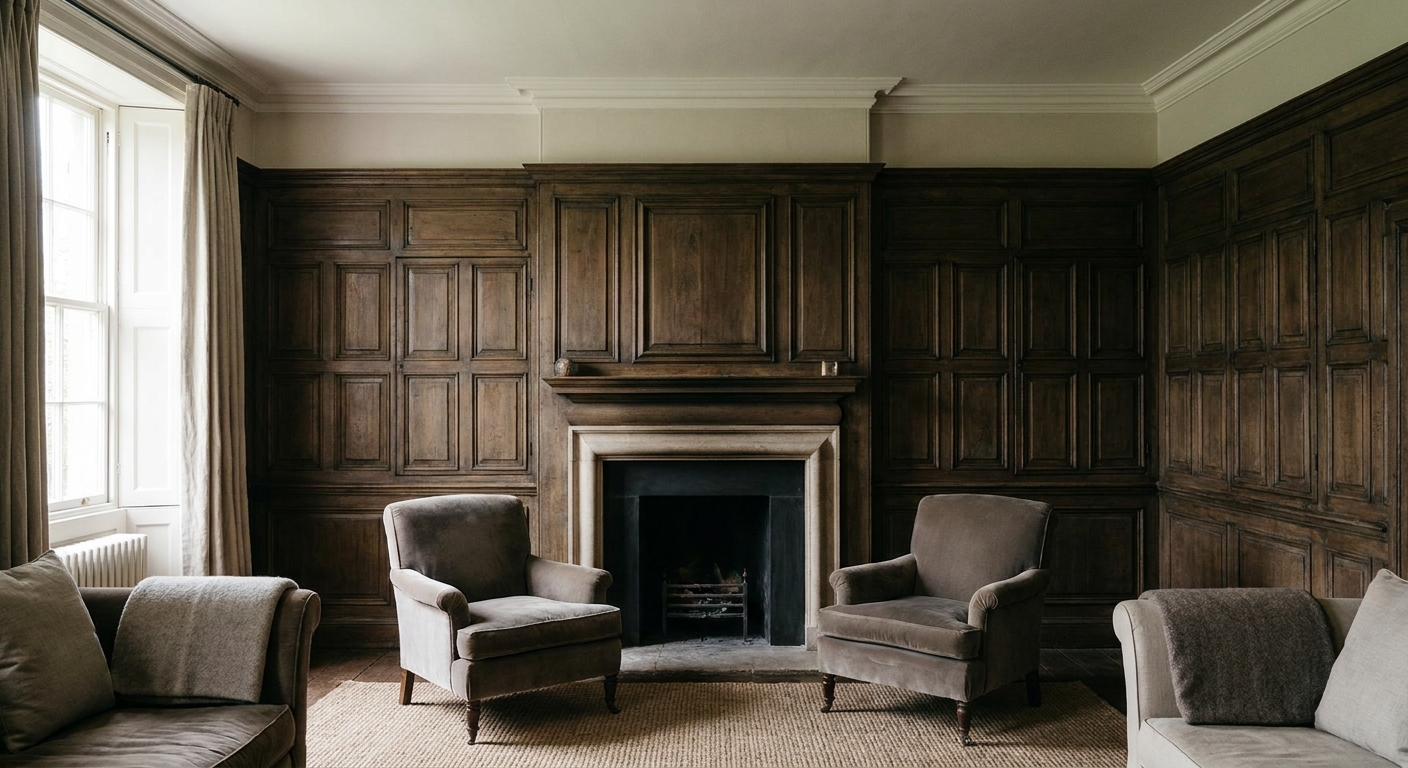
Dado rail installations establish vertical symmetry by dividing interior wall surfaces into distinct proportional zones that directly mimic the classical architectural order of a structural pedestal, a tall column shaft, and a crowning entablature to ensure precise mathematical balance across formal dining rooms and grand residential entryways.
According to architectural historians, the dado rail traditionally sits at a height of 910 millimeters to 1,200 millimeters to protect walls from furniture damage while maintaining aesthetic ratios. The dado rail functions as the top cap of the wainscot, separating the lower protective paneling from the upper decorative wall surface. Michael Forsyth notes that the dado section represents the pedestal base, the primary wall surface acts as the column shaft, and the ceiling cornice serves as the entablature.
Material specifications for wainscoting modules
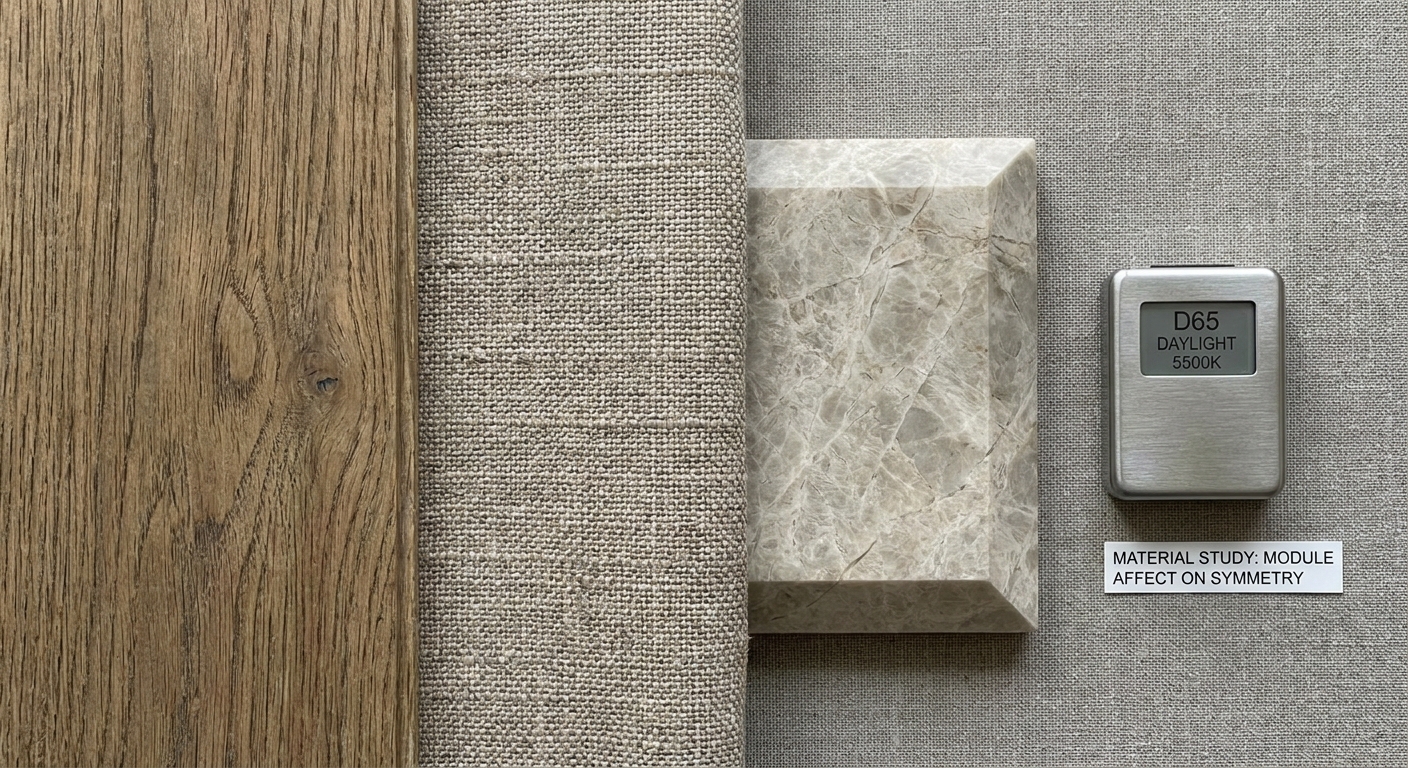
Solid wood materials provide the structural integrity required for traditional wainscoting panels. Craftsmen historically employed carved oak and mahogany to construct rigid frames that resist warping under fluctuating humidity levels. Contractors select specific materials based on the required molding profile and structural demands of the room:
- Solid Oak: Provides high durability for high-traffic areas and supports deep, intricate carvings.
- Mahogany: Offers a smooth grain pattern ideal for dark, polished finishes in formal libraries.
- Medium-Density Fiberboard: Serves as a stable, warp-resistant core for flat central panels in painted applications.
- Plaster: Replaces wood in highly ornate Rococo applications where curved, three-dimensional relief work is necessary.
How boiserie dimensions dictate horizontal balance
Boiserie dimensions dictate horizontal balance by organizing expansive room perimeters into a highly structured rhythmic sequence of alternating wide and narrow carved wooden frames, which allows architects to calculate exact panel widths based on total wall length to guarantee identical spacing around windows, doors, and central fireplace mantels.
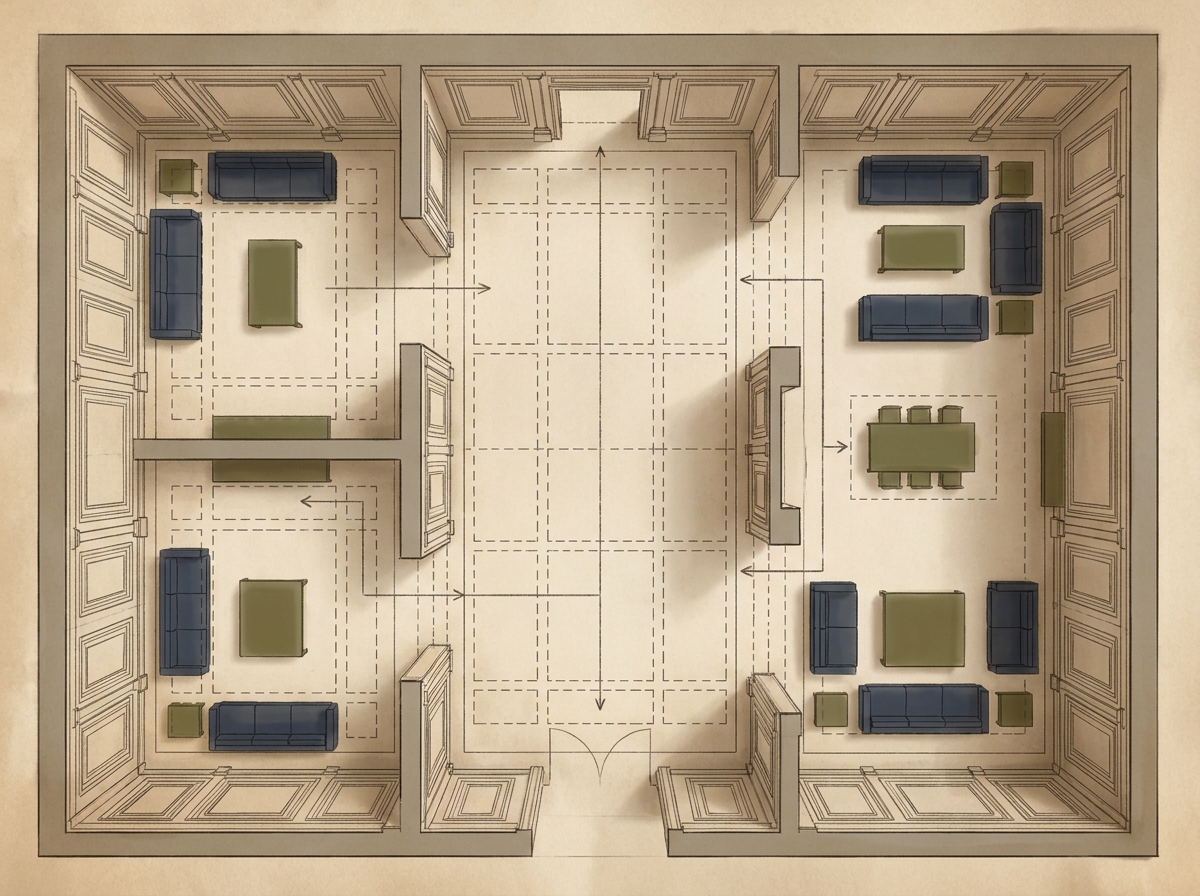
The practice of applying ornate wooden paneling reached a high level of refinement during the 18th century in France, specifically within the Rococo style. A prominent example includes the boiserie from the Hôtel de Varengeville, constructed between 1736 and 1752. Craftsmen built the Varengeville room using carved, painted, and gilded oak panels reaching a height of 5.58 meters. Historical installations required strict adherence to bilateral symmetry, where every panel on the left side of a room mirrored an identical panel on the right side. The integration of tall mirrors within the boiserie framework further amplified the symmetrical effect by reflecting the opposing wall modules.
The role of Georgian paneling in room proportion
During the Georgian era from 1714 to 1830, English architects standardized wall paneling dimensions to reflect the classical architecture of ancient Greece and Rome. Builders divided walls into three distinct horizontal sections using a continuous plinth at the floor, a dado rail at chair height, and a prominent cornice at the ceiling. Georgian architecture relied heavily on mathematical ratios, such as the golden section, to determine the width of individual wall panels. Carpenters constructed the stiles and rails using precise mortise and tenon joints to maintain perfect right angles across the entire wall surface.
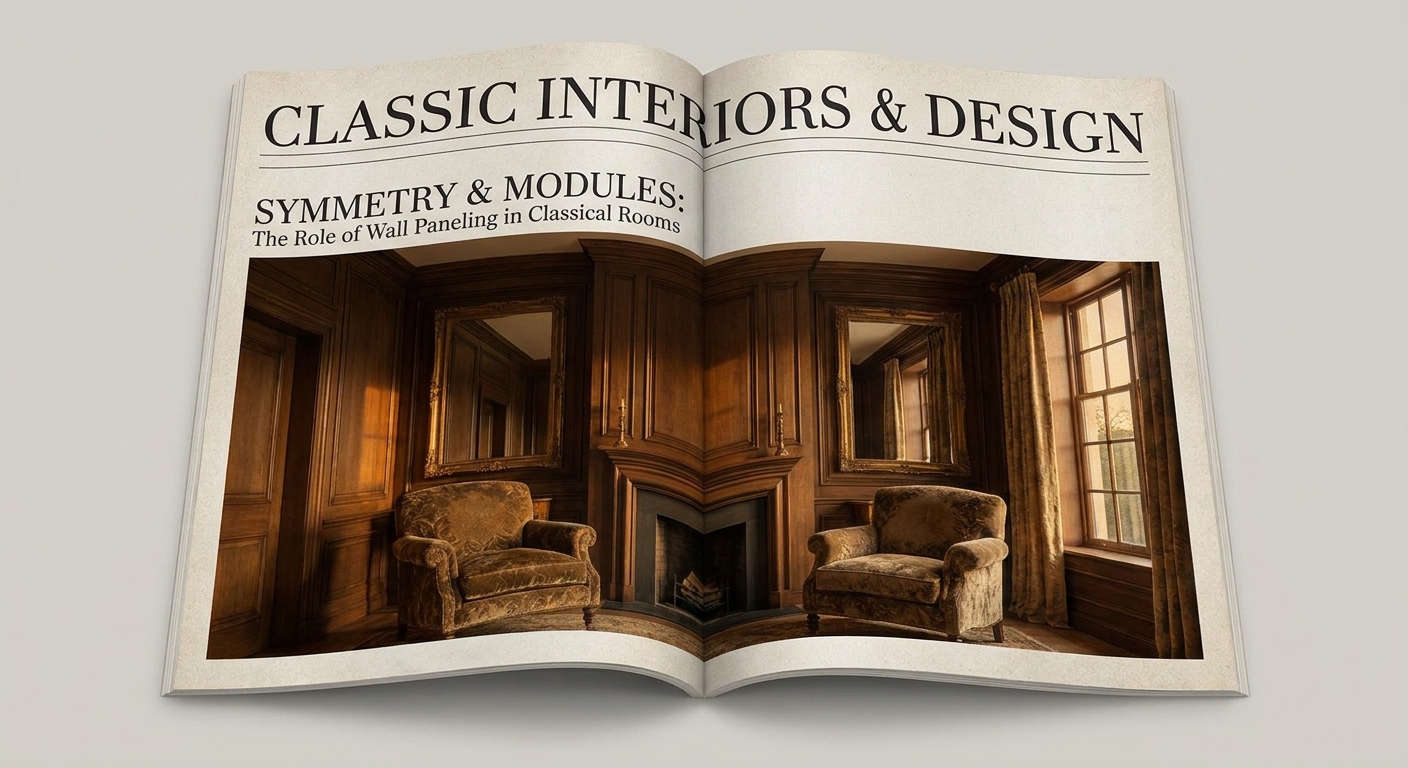
| Architectural Element | Historical Period | Standard Dimensions | Primary Material |
|---|---|---|---|
| Dado Rail | Classical Antiquity / Georgian | 36 to 47 inches (910-1,200 mm) height | Oak, Plaster, Pine |
| French Boiserie | Rococo (1730s-1750s) | Up to 5.58 meters total height | Carved and Gilded Oak |
| Georgian Paneling | 1714-1830 | Proportional to room height (1:3 ratio) | Painted Wood, Mahogany |
Related reading on this site
Readers comparing planning rules can also review Wall Sconce Lighting – A Real Important Place Of Interior Design for adjacent context on the same site.
Material and proportion decisions connect closely with Interior Upgrading Tips At Wall Mirrors, which gives readers another local reference point.
Project research can continue with Interior Design Trends: Diy Wall Picture when the next question concerns a neighboring design topic.